SELFCheck Home Screening Gluten Sensitivity Test 1 Single Test
The SelfCheck Home Screening Gluten Sensitivity Test is an easy to use test in your home to discover if you are Gluten intolerant (Gluten intolerance or wheat allergy are the most commonly used (but incorrect) terms to describe coeliac disease). People who experience bloating, diarrhoea, constipation, fatigue or skin complaints etc after eating certain foods, may like to rule out coeliac disease. The SelfCheck coeliac test works by detecting specific IgA anti-tissue transglutaminase antibodies (tTGA) in the blood. This test is quick and requires a small finger prick needed for a blood sample.
- Easy to use coeliac test
- Results within 15 minutes
- No need to send off for results
- Includes One sealed foil pouch containing 1 test device, one plastic pipette and one desiccant pack. One dropper bottle containing 1ml of diluent, two sterile lancets, one alcohol pad and an instruction leaflet.
- 97% accurate compared to laboratory tests
Around 1 in 100 people have coeliac disease.
Original: $32.00
-70%$32.00
$9.60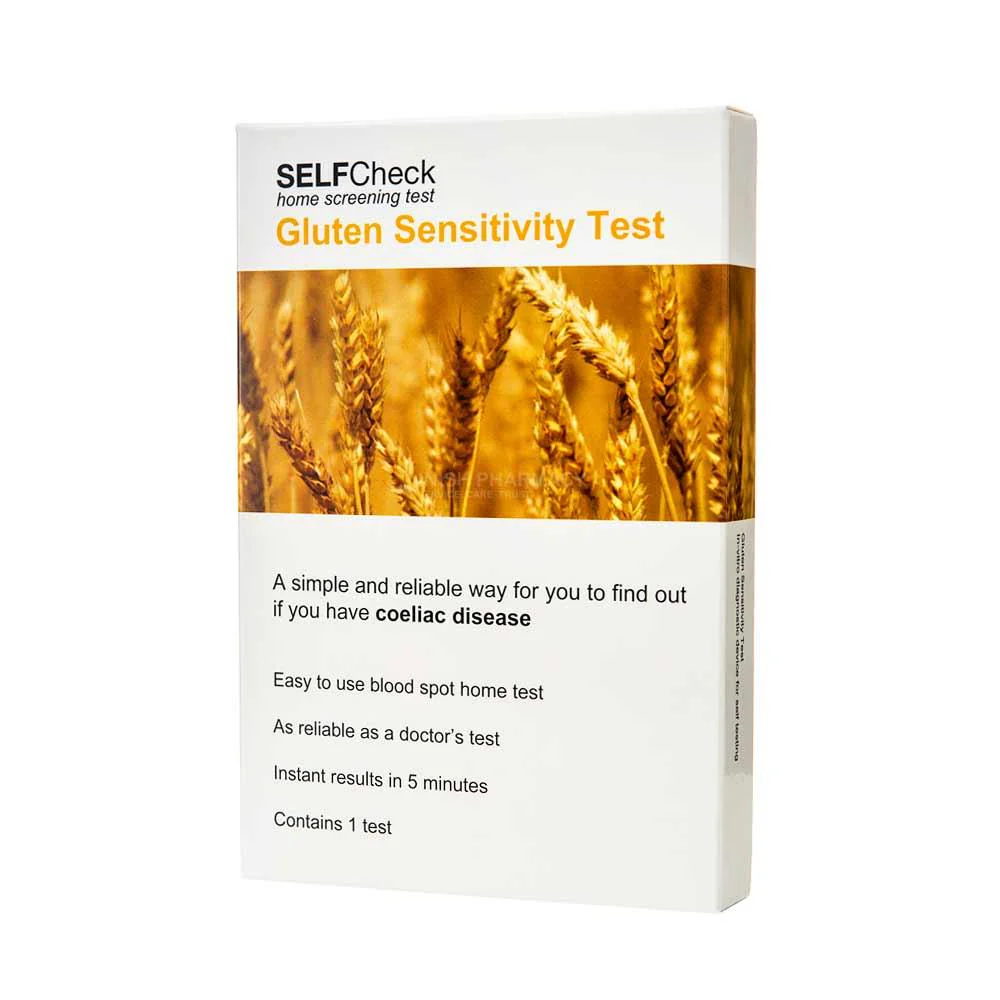
Description
The SelfCheck Home Screening Gluten Sensitivity Test is an easy to use test in your home to discover if you are Gluten intolerant (Gluten intolerance or wheat allergy are the most commonly used (but incorrect) terms to describe coeliac disease). People who experience bloating, diarrhoea, constipation, fatigue or skin complaints etc after eating certain foods, may like to rule out coeliac disease. The SelfCheck coeliac test works by detecting specific IgA anti-tissue transglutaminase antibodies (tTGA) in the blood. This test is quick and requires a small finger prick needed for a blood sample.
- Easy to use coeliac test
- Results within 15 minutes
- No need to send off for results
- Includes One sealed foil pouch containing 1 test device, one plastic pipette and one desiccant pack. One dropper bottle containing 1ml of diluent, two sterile lancets, one alcohol pad and an instruction leaflet.
- 97% accurate compared to laboratory tests
Around 1 in 100 people have coeliac disease.